
KadaiBidMaking card auctions simple again.
Kadai Bid was created to give card collectors a simpler way to run auctions without managing bids through busy chat threads.
As the product evolved, additional requirements around identity, verification, auction configuration and communication increased the complexity of what was originally a simple idea.
BISAIKAN went back to the user journey to understand what the product actually needed to do.
- Status
- V2 build / pilot preparation
- Type
- My own product, not a paying client project
- V1
- Live at kadaibid.site ↗ (opens in a new tab)
- RealCurrent product evidence
- ObservedThe real-world problem
- AnalysisBISAIKAN diagnosis
- Proposed V2Design direction, in build
- FutureResults after pilot testing
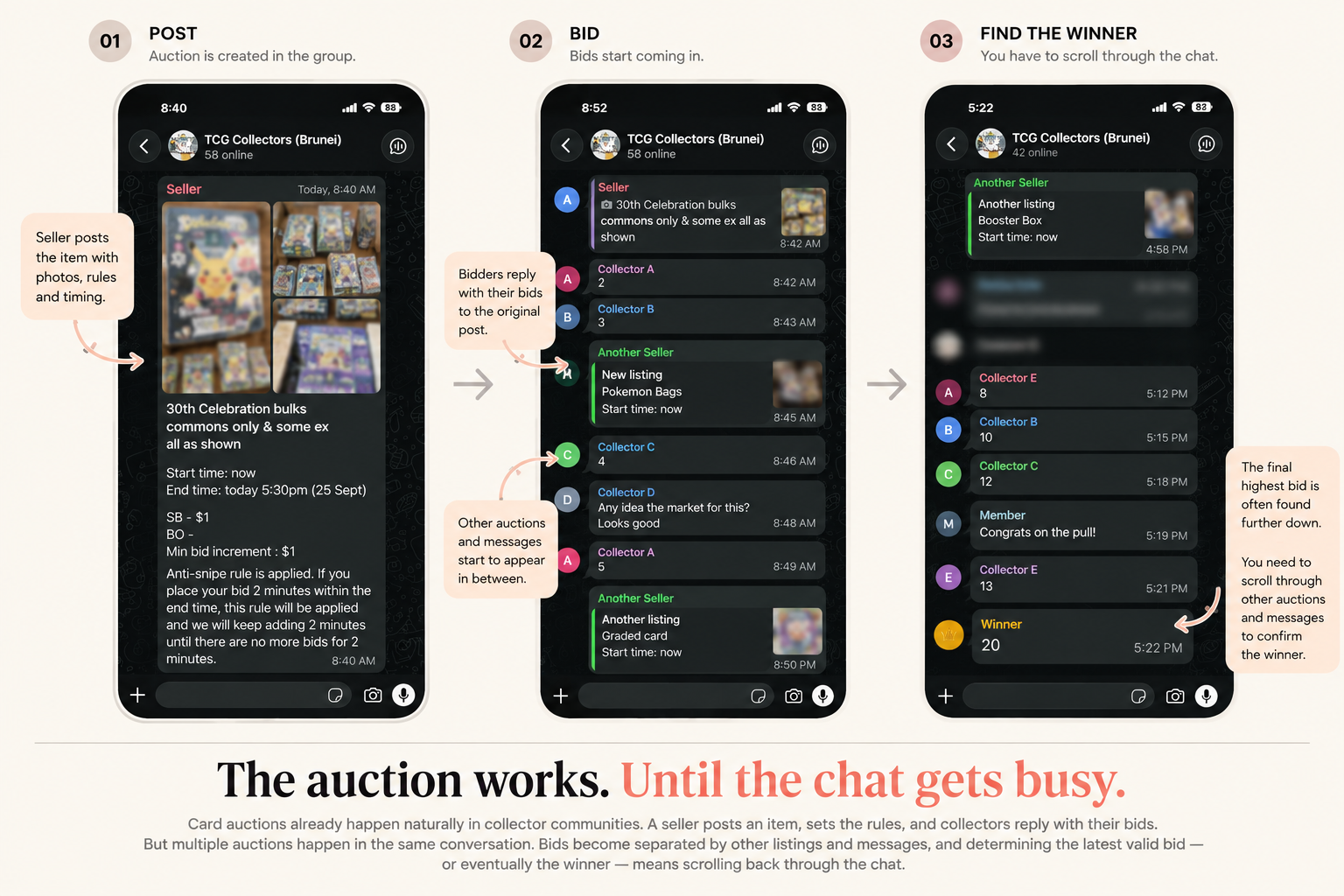
The auction works. Until the chat gets busy.
Card auctions already happen naturally in collector communities. A seller posts an item, sets the rules and collectors reply with their bids.
But multiple auctions can happen in the same conversation. Bids become separated by other listings and messages, and determining the latest valid bid — or eventually the winner — means scrolling back through the chat.
Kadai Bid started with a simple idea:
Give every auction one place where its current state is always clear.
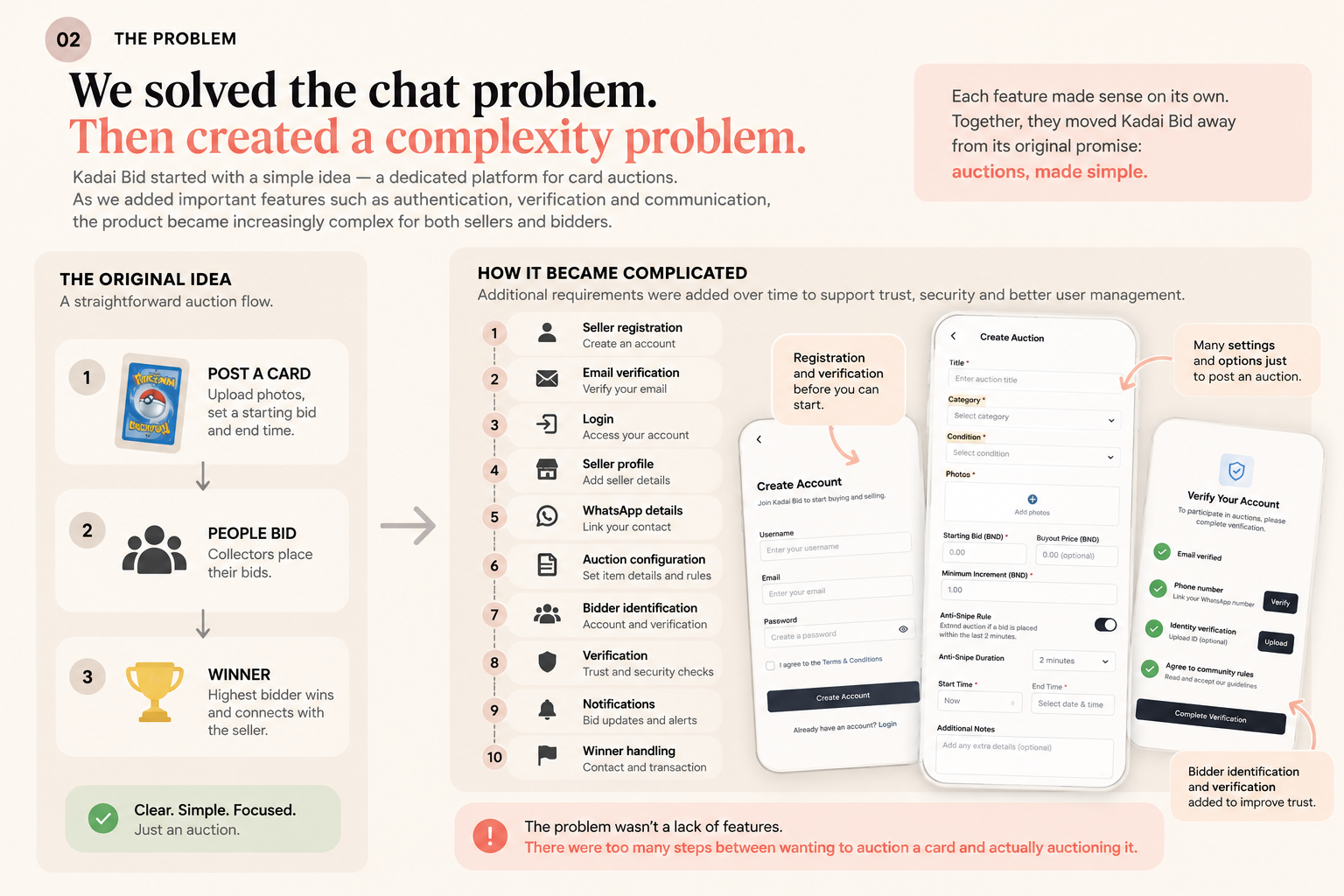
We solved the chat problem. Then created a complexity problem.
Kadai Bid introduced a dedicated place for card auctions.
But as authentication, verification, seller management, auction configuration and communication requirements were added, the product became increasingly complex.
Each requirement made sense individually.
Together, they created too many steps between wanting to auction a card and actually auctioning it.
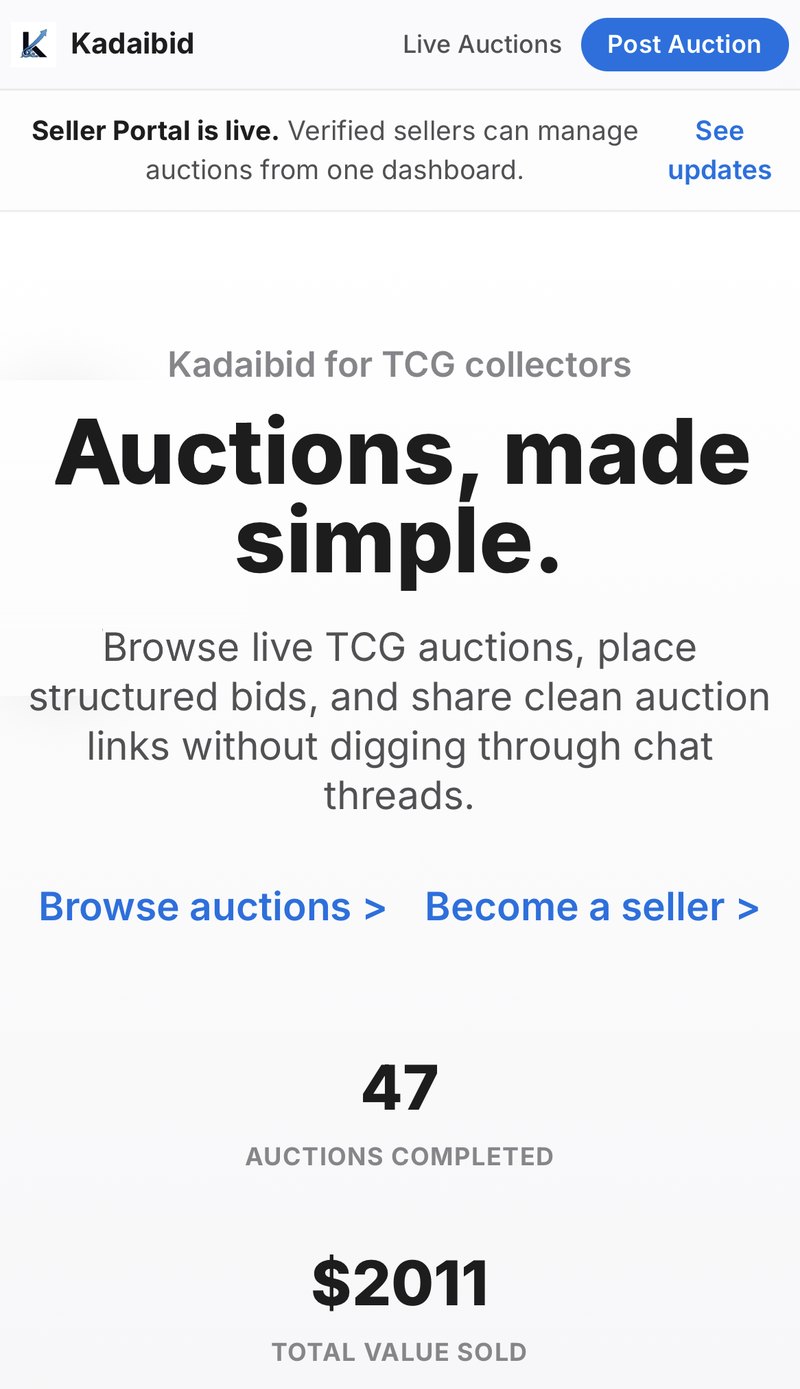
The original solution worked.
V1 has completed 47 auctions and $2,011 in sales, as shown on its live homepage. But additional requirements gradually moved it away from its original promise.
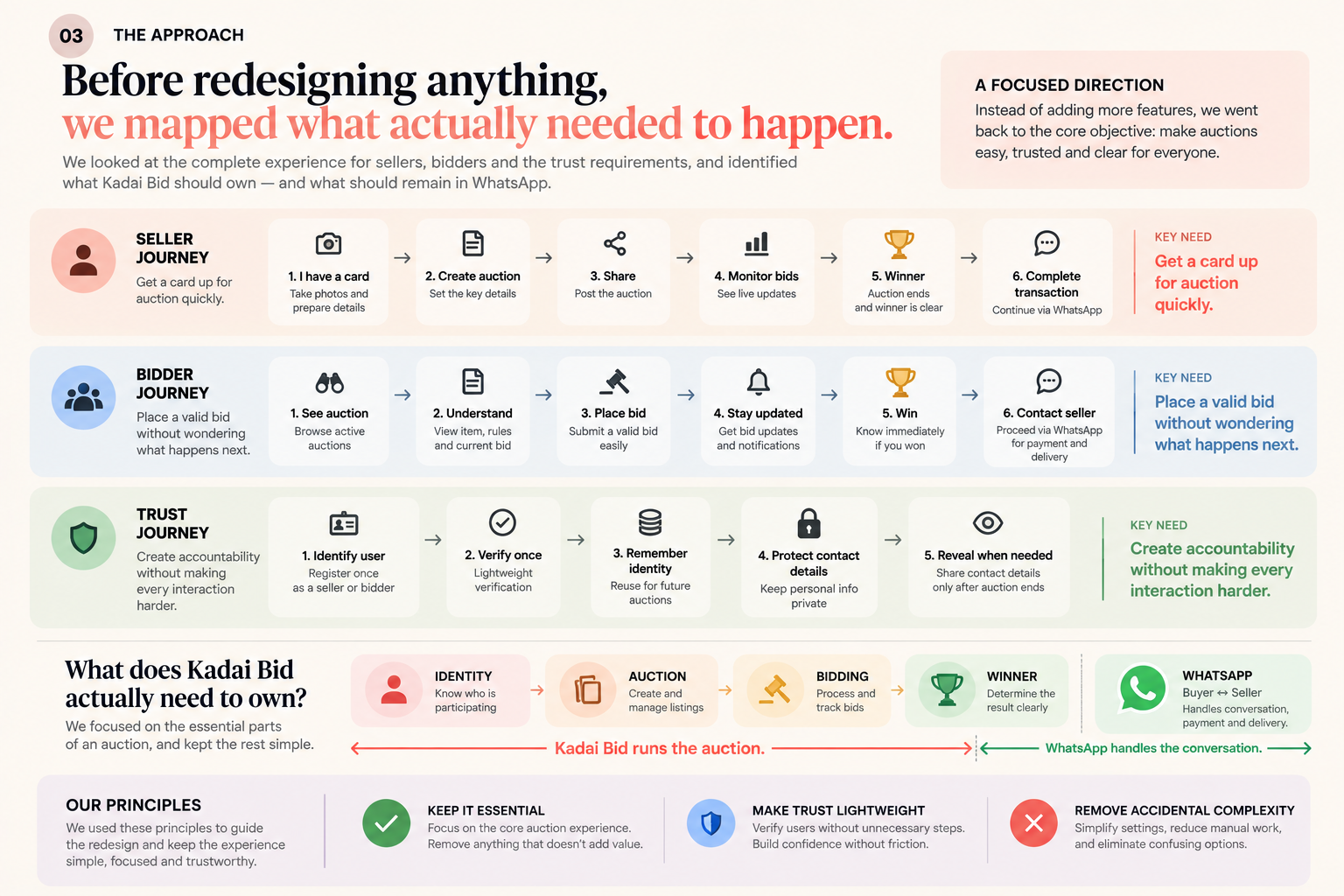
Before redesigning anything, we mapped what actually needed to happen.
BISAIKAN examined three journeys:
- SellerGet a card up for auction quickly.
- BidderPlace a valid bid without wondering what happens next.
- TrustCreate accountability without making every interaction harder.
Kadai Bid owns
- Identity
- Auction
- Bidding
- Winner
WhatsApp handles
Buyer ↔ Seller communication after the auction.
Kadai Bid runs the auction. WhatsApp handles the conversation.
- Essential
- Keep it.
- Trust
- Make it lightweight.
- Accidental complexity
- Remove it.
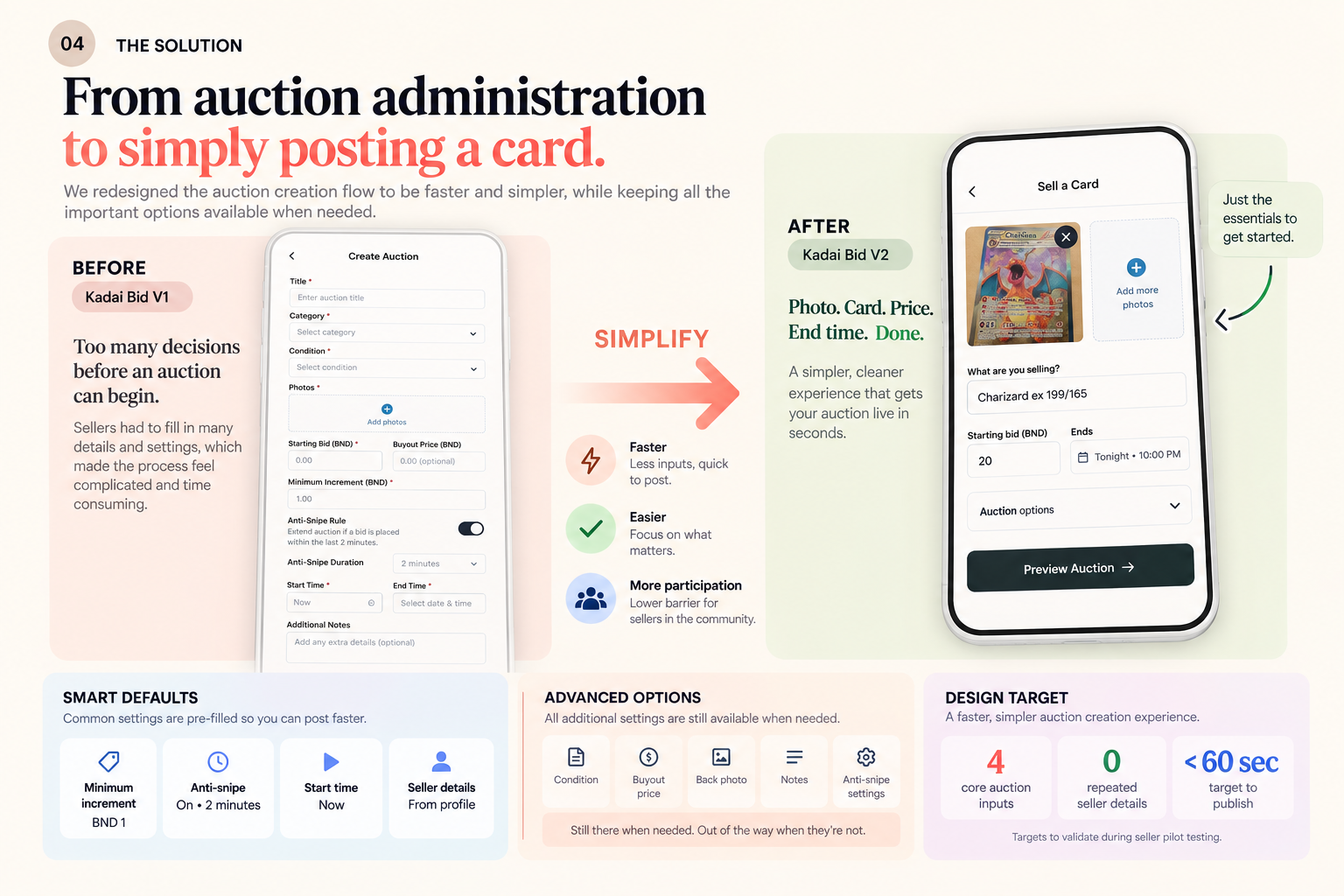
From auction administration to simply posting a card.
In the proposed V2 seller experience, creating an auction needs only four things. Everything else either uses sensible defaults or sits behind optional auction settings.
Core inputs
- Photo
- Card
- Price
- End time
Smart defaults
- Minimum increment
- BND 1
- Anti-snipe
- On / 2 minutes
- Start time
- Now
- Seller details
- Taken automatically from profile
Advanced settings stay available when required: condition, buyout, back photo, seller notes and anti-snipe settings.
Photo. Card. Price. End time. Done.
Design targets To validate during pilot testing — not measured results.
- 4core auction inputs
- 0repeated seller details
- <60 sectarget to publish
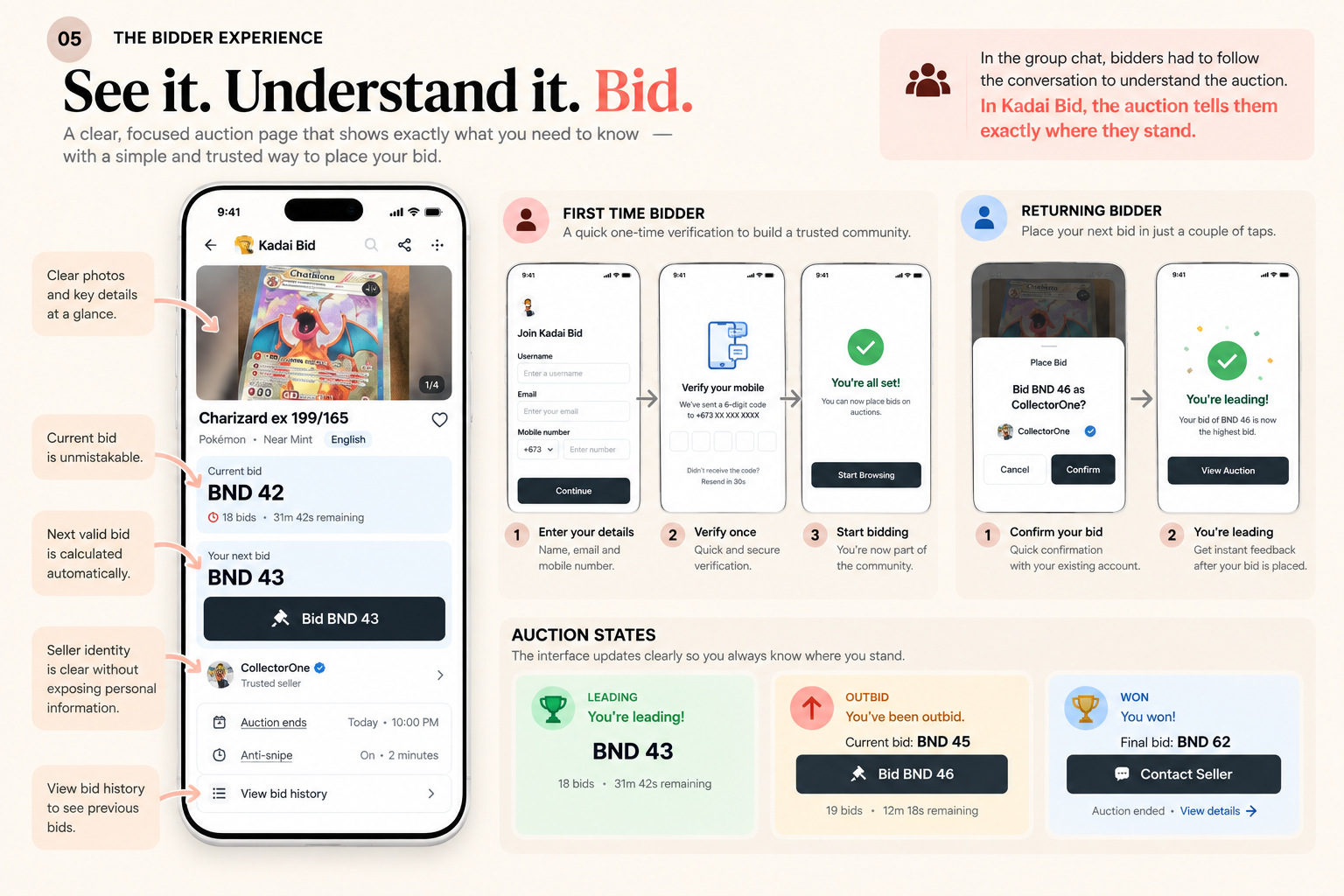
See it. Understand it. Bid.
An auction page should immediately answer:
- What am I bidding on?
- What is the current bid?
- What do I need to bid next?
- How much time is left?
- Am I currently leading?
Trust once. Bid simply after that.
The platform calculates the next valid bid automatically, and the primary action always shows the exact amount (example above). First-time bidders establish their identity once; returning bidders then bid with a simple confirmation.
- LEADING
- OUTBID
- WON
In the group chat, bidders had to follow the conversation to understand the auction. In Kadai Bid, the auction tells them exactly where they stand.
The redesign is only the hypothesis.
Kadai Bid V2 will next be tested through real auctions with collectors and sellers.
The pilot will measure whether simplifying the experience actually makes auctions easier to create, participate in and complete.
Metrics planned
- Time to create an auction
- Seller assistance required
- Bid completion
- Successful auction closure
- Workflow issues encountered
- Whether sellers choose to use Kadai Bid again
FutureCase study in progress. Results will be added after pilot testing.
Better doesn’t always mean more.
Sometimes the biggest improvement comes from understanding what a digital product is actually supposed to do — and removing what gets in the way.